Why you don’t need to fear drones
Behind the headlines are extraordinary possibilities, and trained people who take their responsibilities seriously.
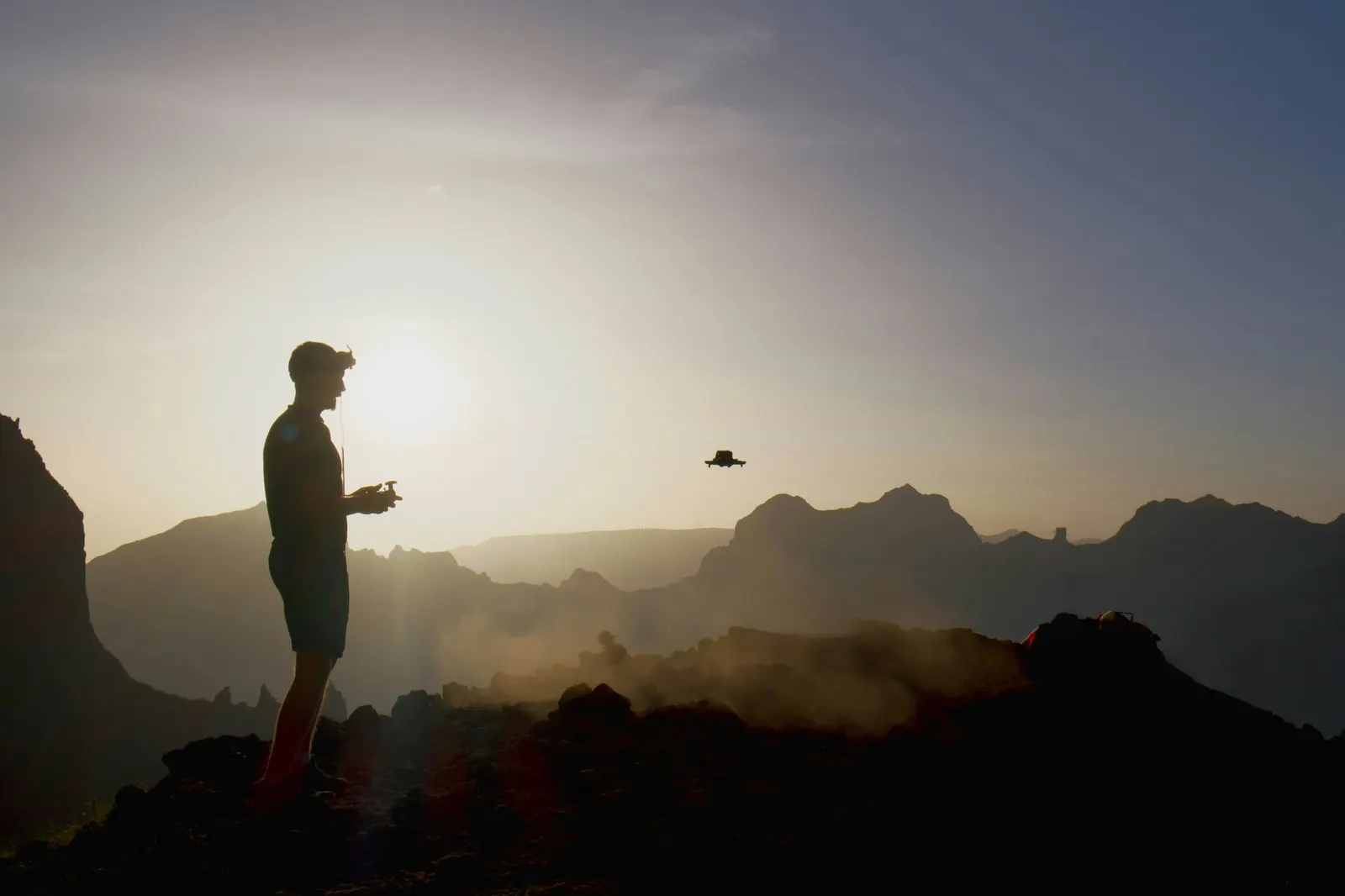
I have a bit of a problem with the word ‘drone’. Not because I don’t love flying them (I’ve been doing it since 2010, which in this industry is practically the Stone Age), but because the word comes with so much baggage. Say ‘drone’ to one person and they imagine a very clever camera flying over a country house. Say it to somebody else and they immediately think of military aircraft, surveillance, warfare, airport closures and the latest alarming headline about a mysterious object in the sky. Same word. Worlds apart. And we wonder why people get nervous when they hear a little buzzing noise above a garden.
What rarely makes the front page is the rather wonderful stuff civilian drones do all day long. They help search teams cover difficult ground. They let inspectors look at an unsafe roof without putting somebody on it. They help conservation teams study habitats and surveyors make sense of landscapes. They document historic buildings and give us viewpoints that used to require helicopters, scaffolding or extraordinary expense. And, in our case, they let us turn entire destinations into accurate, extraordinarily detailed digital environments that people can explore.
Not terribly sinister, is it?
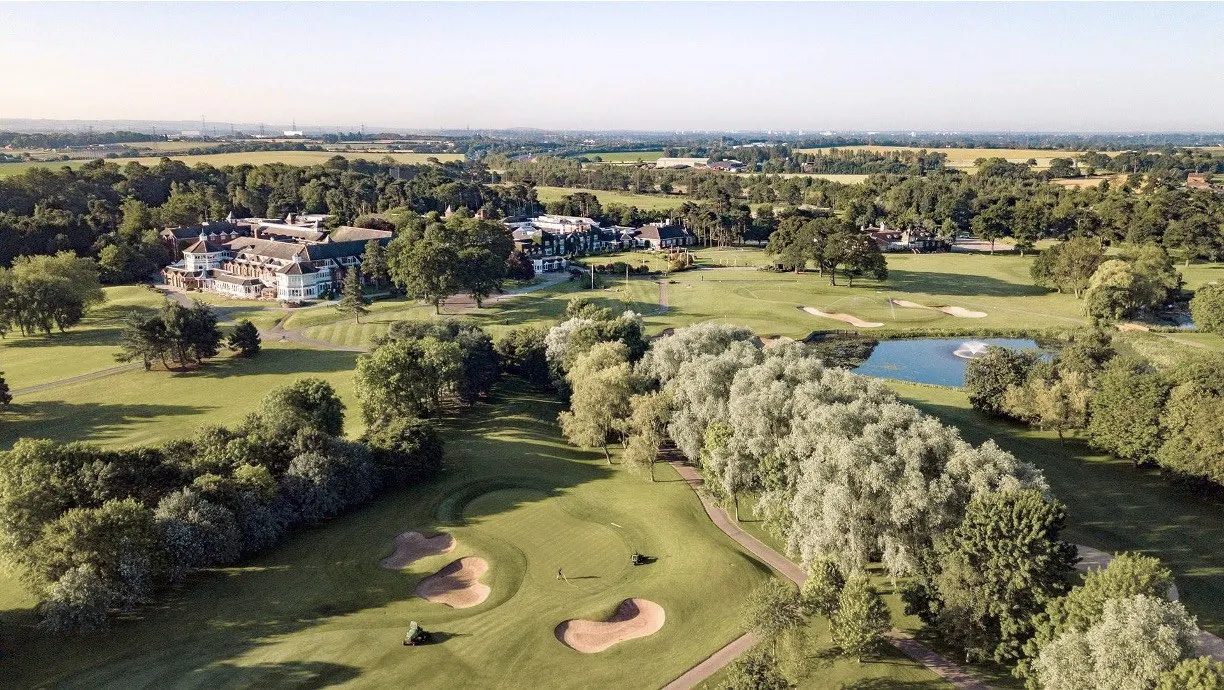
I think we’ve allowed the word, a handful of high-profile incidents and some spectacularly unhelpful headlines to shape the conversation far more than the everyday reality deserves. So I’d like to explain what actually happens when we turn up to fly a drone, and why a responsible, trained operator is something to be reassured by rather than afraid of. Not because drones are harmless toys (they’re aircraft, and they deserve respect), but precisely because we take that responsibility seriously.
How did drones get such a bad reputation?
A great deal of the image problem starts with the name. A military remotely piloted aircraft and a small camera-equipped machine photographing a botanical garden are both called ‘drones’. If I were inventing a marketing campaign for the civilian industry from scratch, I suspect I might start by choosing a different word. Yet here we are. Throw in that the rare incidents involving drones tend to produce extraordinary amounts of attention, while millions of ordinary, uneventful flights generate precisely zero headlines, and a distorted picture of the industry is almost inevitable.
Gatwick in December 2018 is the obvious example, and I still find the whole thing extraordinary. Reports of a drone near the airport triggered days of major disruption, around a thousand flights were affected and roughly 140,000 passengers had their plans thrown into chaos. Contemporary reports put airlines’ losses at about £50 million. An airport is absolutely right to take a possible airspace threat seriously, and I would never suggest otherwise, but look at what emerged afterwards and tell me it isn’t worth having a proper conversation about evidence, uncertainty and the way fear can feed on itself.
- ~1,000
- flights affected over days of disruption at Gatwick, December 2018
- 140,000
- passengers who had their plans thrown into chaos
- £50m
- in losses to airlines, according to contemporary reports
After a lengthy police investigation, nobody was charged or identified as the person responsible for an unauthorised drone. We never got conclusive public photographs or recovered aircraft that settled exactly what had happened. There were documented mistaken sightings, including one report that turned out to involve a distant helicopter; police officers also acknowledged that some later sightings could have been their own drones searching the area. Sussex Police nevertheless maintained, based on witness testimony, that at least two unauthorised drones had been operating. Other people disputed that conclusion. So I am not going to tell you ‘the Gatwick drone definitely never existed’, because that goes further than the evidence allows. What I am saying is that the public story became enormous while the underlying evidence remained hotly contested.
And once a story like that takes hold, it’s difficult to put the genie back in the bottle. People remember the headlines, the chaos, the pictures of stranded passengers, the talk of enormous investment in counter-drone security. They rarely remember the later, rather more complicated discussion about what anybody actually saw. It’s not an argument for being casual about airport safety. It’s an argument for keeping our heads, investigating properly and resisting the temptation to treat every reported light or buzzing object as the beginning of an aviation catastrophe.
None of this suggests that airport security concerns should be ignored. Quite the opposite: reports of potentially dangerous activity around an airport must always be taken seriously. But Gatwick illustrates something important about the relationship between unfamiliar technology, public perception and the speed at which uncertainty can become an international news story. The consequences of that incident, including significant investment in counter-drone systems and changes to aviation regulations, extended far beyond those three days in December.
Meanwhile, the overwhelming majority of responsible drone operators were simply continuing their perfectly legitimate work. And that work rarely makes the headlines.
The extraordinary things drones are actually doing
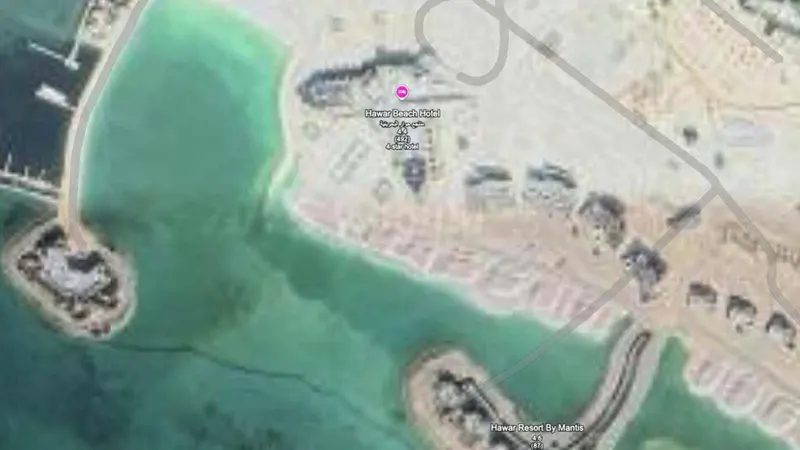
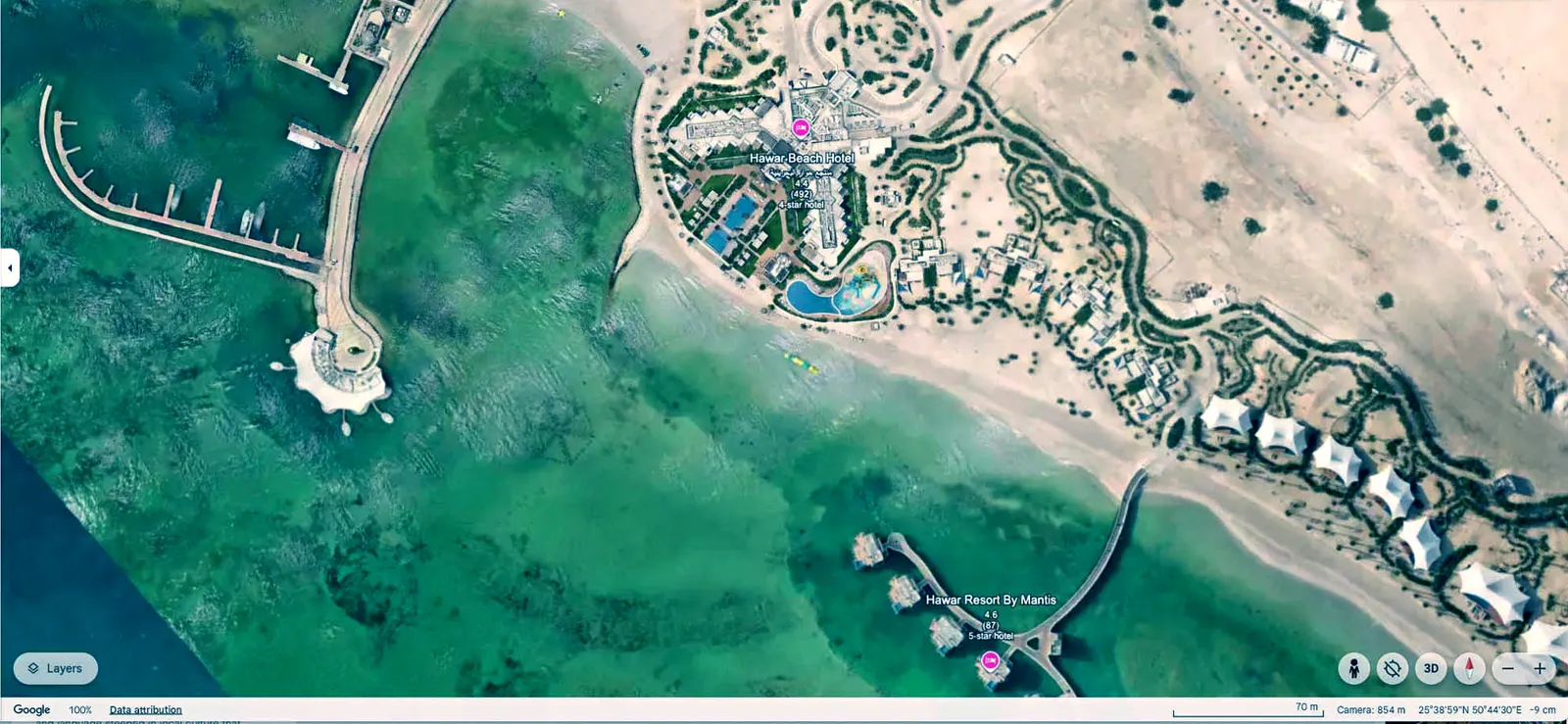
Now compare that story with what we actually do. We take thousands of photographs of a real place (a hotel, a university, an estate, a botanical garden) in a very structured way. We process them into a high-resolution overhead image or a remarkable three-dimensional environment. We use those environments to help guests find their way, to show a venue accurately, to let somebody investigate a destination before they travel. In some cases we submit suitable aerial imagery as an official Google Maps Content Partner; Google decides what it will publish. This is about documenting places. We’re not sitting there trying to identify strangers sitting by a swimming pool. That’s not our purpose, and our capture plans should reflect it.
The GaSP technology we’re now using adds another extraordinary layer to the story. Stop moving an immersive scene and it can look like a photograph. Move your viewpoint and you can travel around it. Explore the gardens, see where the restaurant sits in relation to reception, work out how to get to the beach. It’s the kind of thing I would have thought belonged in a science-fiction film when I started flying drones all those years ago. The drone is simply one of the tools that lets us capture the real world with enough detail to make that experience possible.
HypaMaps is an official Google Maps Content Partner, and we have prepared and submitted high-resolution aerial imagery through that programme. Google’s own published rules confirm that contributing imagery doesn’t guarantee its appearance in the public satellite layer. That is one of the productive uses we make of our drones: documenting real places with detailed spatial data. Our missions are not designed to follow individuals or intrude on their private activities, but incidental capture of people is still possible and must be handled appropriately.
There’s much more to a flight than flying
When you see us flying at a venue it might look dead simple. Drone goes up, drone moves about, drone comes down. Job done. But I can assure you that quite a lot should have happened before those propellers start. What’s the local airspace? Are we near an aerodrome? What are the access arrangements? Is there a public footpath through the grounds? Where can we launch and recover safely? What’s the weather really doing, not just what a generic phone forecast suggests? How will the wind behave around the taller buildings or trees? And what is it we actually need to capture to produce a useful dataset?
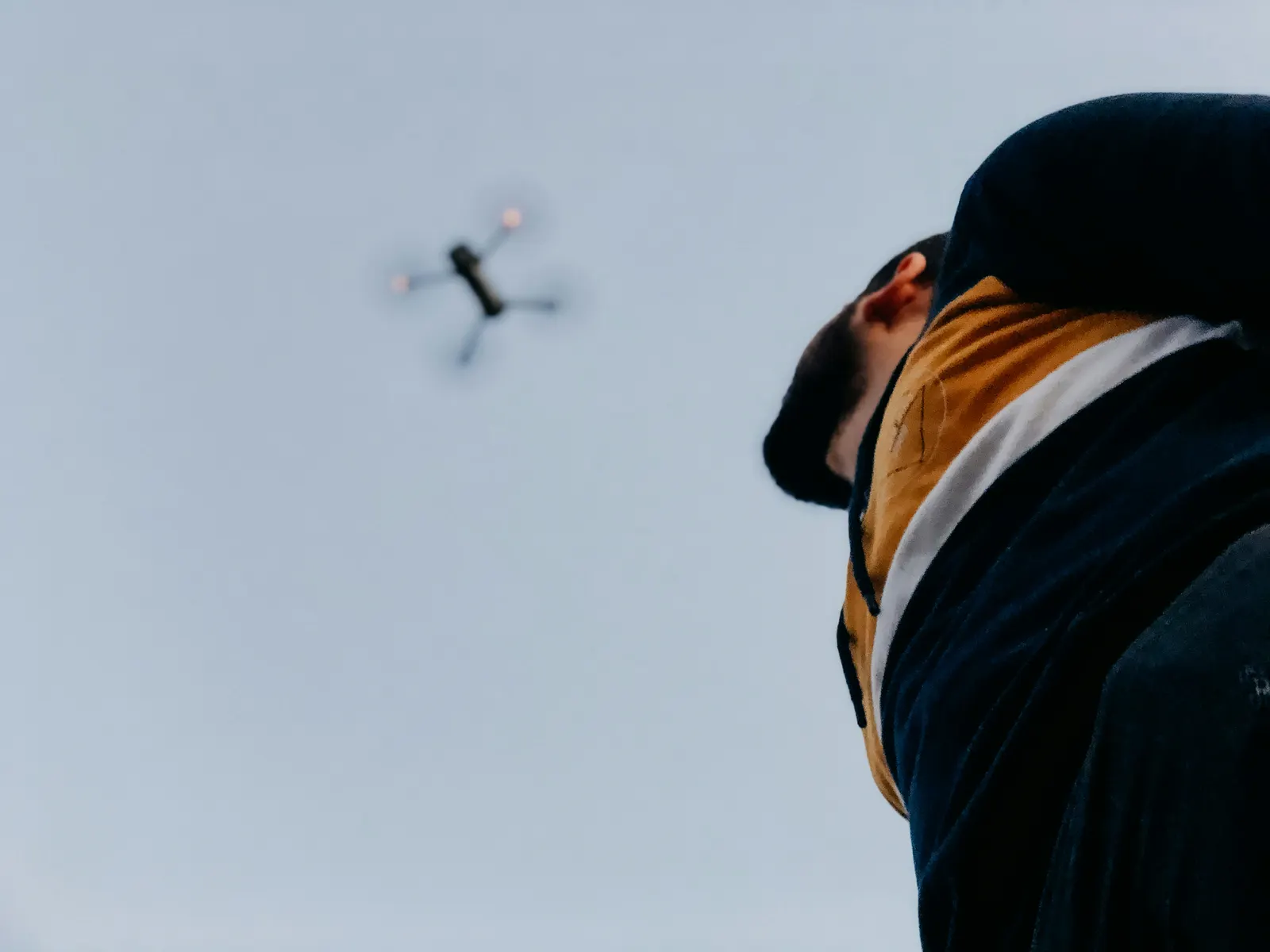
I sometimes think that the whole industry would have a much easier time if people could see the planning as clearly as they can see the drone. Because that’s what separates a responsible operation from somebody turning up, pressing a button and hoping for the best. You won’t necessarily see our risk assessments or the discussions we’ve had with the venue. But they should be informing everything the aircraft does once it takes off.
I’ve been flying since 2010. I was among the early people using drones commercially in Southeast Asia, when there wasn’t a neat, universally understood procedure for every situation. I developed quite a rigid set of personal rules because common sense told me how much care this equipment demanded. When I trained formally in the UK in 2016, I discovered that a lot of what I’d been doing already was very close to the professional standards taught by flight schools. That’s not me saying I invented drone safety! It simply reinforced something I’d learnt from experience: the really impressive thing about a good pilot isn’t an acrobatic trick. It’s how many boring, sensible decisions they make correctly, over and over again.
Why the pilot has the final say
Here’s the point about the pilot that I really want members of the public to understand. Our flight may have been planned weeks ahead. Everyone at the venue may be expecting us. The forecast might have looked excellent the evening before. And still, when the operator arrives, things can have changed. More visitors than expected. A vehicle parked where we planned to take off. A lively patch of wind above the roofline. A bird of prey taking rather too much interest in the aircraft. Suddenly somebody has to make an intelligent decision, and they can’t always get that decision from a checklist written three days ago.
Sometimes the right answer is to change the sequence of flights. Sometimes it’s to move the operating area. Sometimes it’s to wait twenty minutes. Sometimes you simply bring the drone down, even if the light is gorgeous and the client is desperate for the pictures. Aviation has always worked on the principle that the person controlling an aircraft carries direct responsibility for operating it safely. In UK regulations the formal term is ‘remote pilot’; I often use ‘Pilot in Command’, or PiC, because it gets across the role rather well.
So when I say the pilot calls the shots, I mean the pilot must be able (and sometimes is legally required) to make the safe go/no-go and stop-flying decisions, within the permissions, law and approved operating procedures. That doesn’t mean a pilot is above the law, can fly wherever they fancy or can disregard an air traffic instruction. Quite the reverse. It means the system has a trained, accountable person who knows where the boundaries are and is expected to stay inside them. A client can’t demand an unsafe manoeuvre because they’re in a hurry. I can’t telephone an operator from HypaSpace HQ and insist they continue a flight they consider unsafe. And that ought to reassure people.
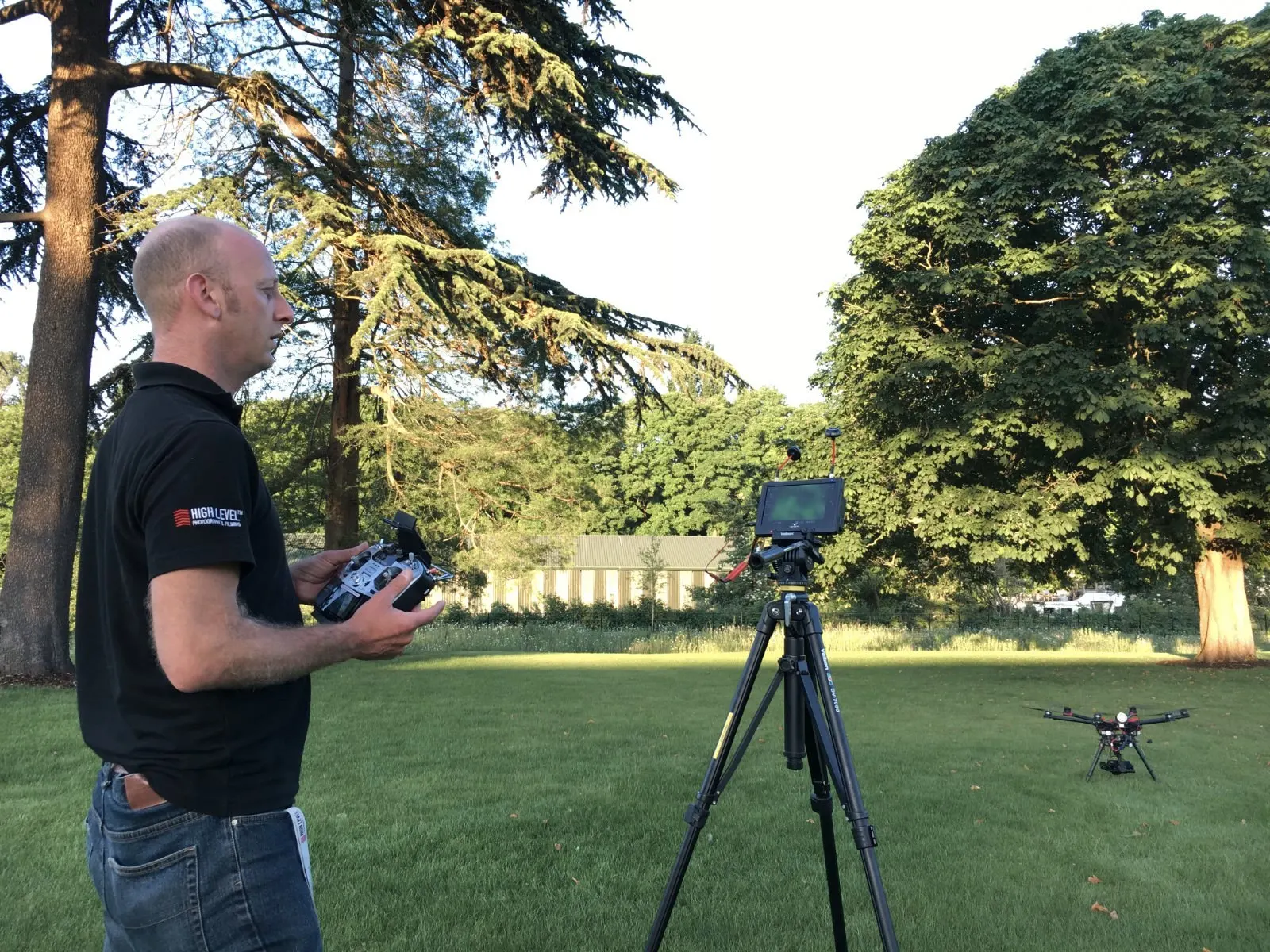
Think about that for a moment. People sometimes worry that a drone is an autonomous thing whizzing about according to its own mysterious whims. The routes might be automated, yes, and the technology is extremely clever, but the responsibility has not disappeared into a circuit board. Our operator is watching, assessing, making decisions. The purpose of the training is to make those decisions good ones. There is no prize for blindly completing a flight plan in bad conditions, and I’d rather lose a day’s imagery than put a person, an animal or another aircraft at risk.
I’d rather lose a day’s imagery than put a person, an animal or another aircraft at risk.
At HypaSpace, we positively encourage our pilots to exercise that judgement. We would always rather have an operator postpone or adapt a mission than feel pressured into completing something that shouldn’t proceed. It’s not about blindly following a flight plan. It’s about understanding how to complete the mission safely, even when the world around us doesn’t cooperate.
What if you’re approached by a drone operator?
I also want to say a word about the person who wanders over to ask, ‘What are you filming?’ Most of the time that’s absolutely fine. Curiosity is healthy. You may never have seen a professional aerial capture before, and some of the results are genuinely fascinating. Our pilots should be courteous, readily identifiable and happy to explain what they’re doing when it is safe to have the conversation. We’re not running secret missions. We’re often there because the venue has invited us to update its map.
But if the operator is flying, please understand why they might say, ‘I’d love to tell you all about it, but can we chat when I’ve landed?’ It isn’t rudeness. It’s not some mysterious security rule. It’s that they are controlling an aircraft and they need to concentrate. You wouldn’t ask an airline pilot to turn around during the approach to Heathrow and discuss what brand of headphones they’re wearing. The scale of the aircraft is different, obviously, but the need to maintain attention is a very real part of responsible flying.
If you approach an operator during a flight, they may politely ask you to give them a moment until the aircraft has landed safely. That’s not somebody being dismissive or secretive. That’s somebody doing their job properly. And it’s precisely the kind of professional judgement we’d hope people would find reassuring.
What about privacy?
Privacy is another perfectly reasonable subject, and I don’t want to wave it away with a breezy ‘nothing to see here’. Yes, drones have cameras, and yes, depending on the equipment and circumstances a person can be identifiable in a photograph even when they were never the intended subject. We work to capture venues and landscapes, not people’s private activities, but that doesn’t absolve anybody of data-protection duties. Missions need sensible procedures around notices where appropriate, secure data handling, retention, sharing and what gets published. Our operators must know the boundaries. That’s how you earn confidence, not by telling someone their concern is silly.
Also, for the avoidance of doubt, photography for mapping is quite different from following one person around with a camera. You’re systematically collecting overlapping images of the physical setting so that software can reconstruct it. That doesn’t mean privacy questions vanish, but it does explain what the equipment is there to do. If people ask, I’d much rather we answer plainly than hide behind jargon. The more familiar this becomes, the less mysterious it will feel.
The right approach isn’t to dismiss people’s concerns. It’s to behave in a way that earns their confidence.
Building a network of people you can trust
That philosophy is the whole point of our developing HypaSpace operator network. We want capable prosumer pilots, train them to a demanding common standard and give them a proper opportunity to do worthwhile commercial work. They need to understand photography, flying, image overlap, airspace, weather, professional conduct: the lot. And crucially, they need to know what to do when the plan doesn’t quite match reality. The goal isn’t to assemble a thousand people with drones. It’s to assemble a network of people we would be perfectly comfortable sending, on their own, to represent us at a client venue.
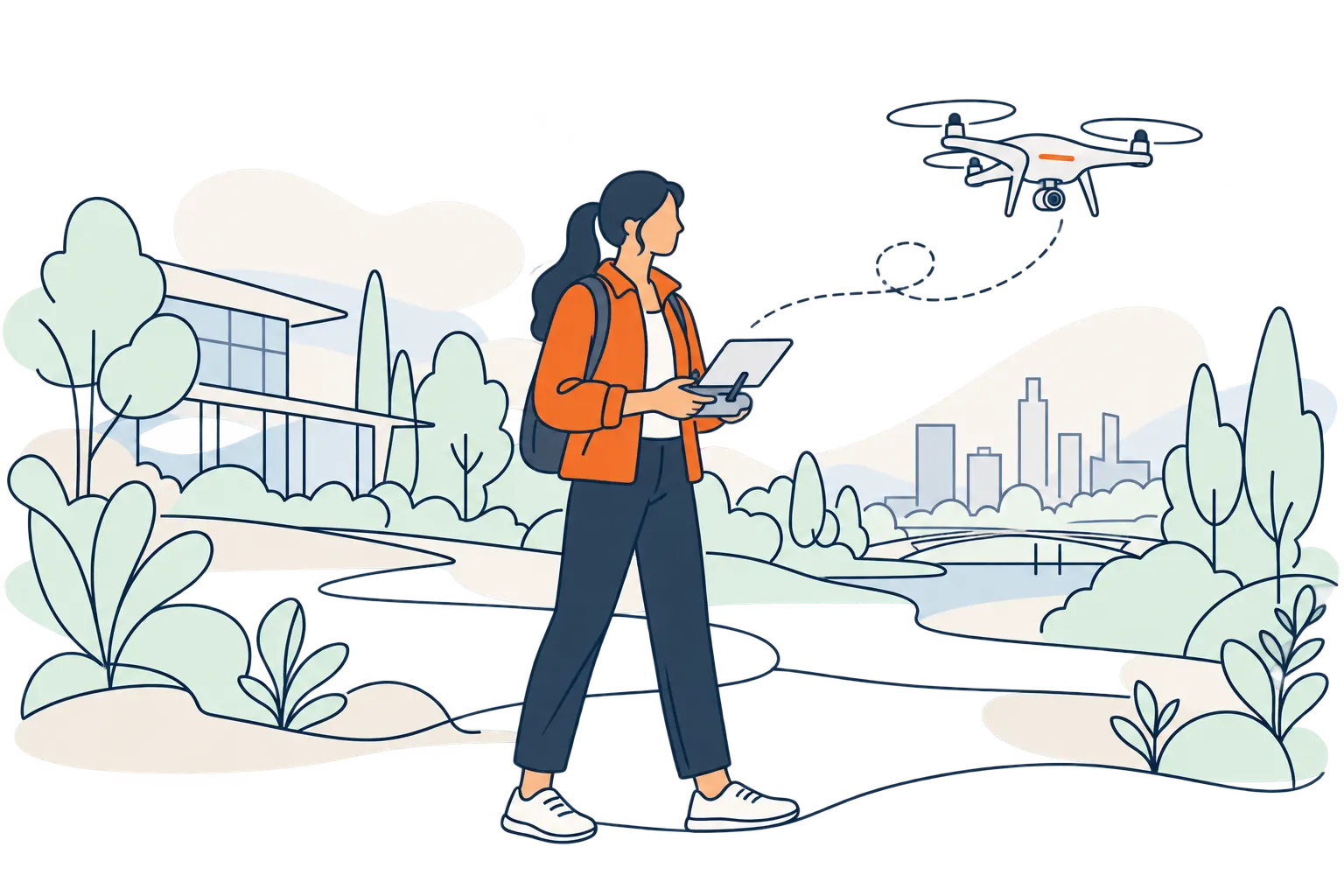
We’ll assess their capture work, give them practical exercises, check datasets and teach them how to identify holes before they drive away. They’ll be expected to turn up smartly, talk to people politely and call us if an issue needs sorting out. I want the venue manager watching from the office window to think, ‘Those people are organised.’ I want a visitor who asks a question to come away thinking, ‘Oh, that’s actually rather interesting.’ And I want our pilot to get home after a good day’s work without ever having felt pressured to take an unnecessary risk.
Every submitted dataset will undergo technical quality checks, helping us identify missing coverage or other issues before the operator leaves a site. It’s a carefully structured process designed to achieve consistent results wherever we operate. We want clients to have confidence in the imagery we’re producing. We want venue visitors to feel comfortable with our presence. And we want our pilots to feel confident that they’re part of a professional organisation which supports them when they make responsible decisions.
A different perspective
I’m not asking people to abandon common sense. Drones are aircraft. The law matters. Privacy matters. Airspace matters. There are perfectly legitimate situations where an operator should be challenged, a flight should stop or a report should be investigated. I’m only asking that we don’t leap from ‘there’s a drone overhead’ to ‘something terrible must be happening’. There’s a very large, very positive civilian industry behind that little aircraft, and most of its work is almost hilariously ordinary, in the best possible way.
But it would be unfortunate if the extraordinary benefits of civilian drones continued to be overshadowed by the actions of a minority, by military associations or by sensational headlines. From saving lives and protecting historic buildings to documenting changing landscapes and creating entirely new digital experiences, drones are becoming remarkably useful tools.
At HypaSpace, we’re proud to be using them to help people discover, understand and navigate the world in ways that simply weren’t possible before. And we’re equally proud of the standards we expect from the people who fly them.
So next time you hear the familiar buzzing overhead, perhaps have a look and consider what the person flying might actually be doing. There may be an engineer checking a dangerous roof, a conservation project studying the landscape, or one of our operators helping turn a venue into a truly explorable digital place. It may have nothing whatsoever to do with the worrying headlines you remember. And if you do have a genuine concern, asking a calm question when the pilot is free to answer is a far better starting point than assuming the worst.
And behind that aircraft, there should be somebody who understands their responsibilities, respects the people around them and knows exactly when to make the right call.
The drone is simply the tool. The professionalism comes from the person using it. And I’d like that to be what people think of first.